
As I stirred the sizzling beef in my skillet, the aroma of garlic wafted through my kitchen, announcing that magic was about to happen. This Spicy Korean Gochujang Beef Noodles dish has a way of transforming ordinary evenings into explosive flavor adventures. With tender beef mingling beautifully with chewy noodles, all wrapped in a fiery gochujang sauce, it’s a quick prep solution that promises dampened cravings and satisfied appetites. Not only is this meal a crowd-pleaser, but it’s also highly customizable, allowing you to swap proteins for shrimp, chicken, or even tofu. Whether you’re hosting a lively dinner or enjoying a solo night in, these noodles are just the ticket! Are you ready to embark on this culinary journey with me?
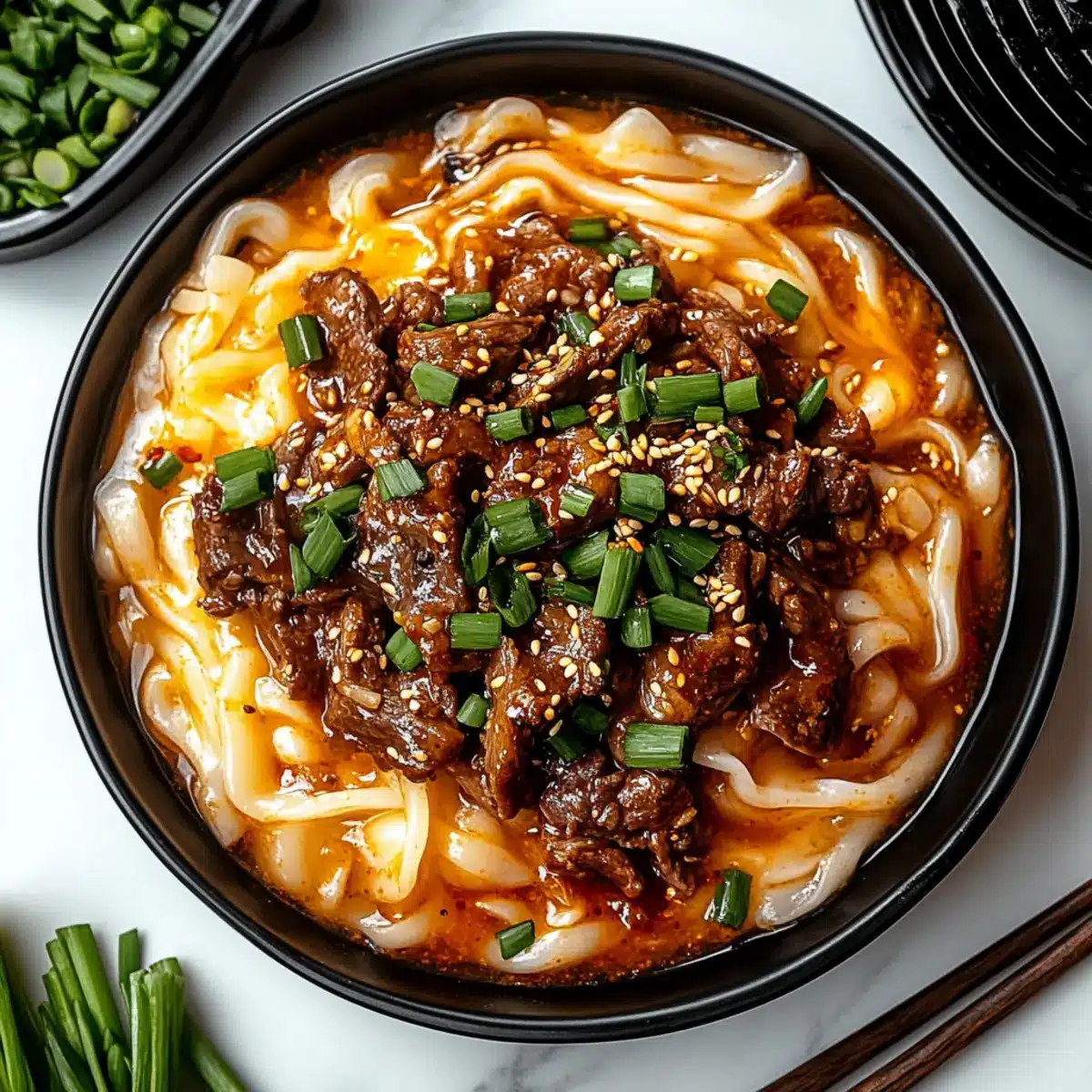
Why will you crave these noodles?
Flavor Explosion: Every bite of these Spicy Korean Gochujang Beef Noodles is bursting with rich, savory goodness thanks to the unique blend of gochujang and fresh vegetables.
Quick Prep: With only a few simple steps, you’ll have a delicious meal ready in under 30 minutes—perfect for busy weeknights.
Endless Customization: Swap out the beef for chicken, shrimp, or even tofu for a versatile dish that fits any dietary preference.
Crowd-Pleasing Delight: Impress family and friends with a vibrant, colorful plate that not only looks stunning but promises a tantalizing dining experience.
Comfort in a Bowl: The combination of tender beef, chewy noodles, and a spicy sauce makes this dish the ultimate comforting meal that feels like a warm hug!
Ready to try more unique flavors? Check out our Bibimbap Twist for an exciting variation!
Spicy Korean Gochujang Beef Noodles Ingredients
For the Beef
• Beef Sirloin – a great choice for its rich flavor and tenderness that cooks quickly.
For the Sauce
• Gochujang – this spicy Korean chili paste is essential for that fiery flavor; adjust the amount to suit your heat preference.
• Soy Sauce – adds umami richness; opt for low-sodium if you’re looking for a healthier alternative.
• Brown Sugar – balances the heat from the gochujang; honey or maple syrup can work as tasty substitutes.
• Sesame Oil – introduces a nutty aroma; light olive oil can be an alternative if you prefer less intensity.
• Rice Vinegar – provides that necessary tang; can be swapped with white vinegar if needed.
For the Veggies
• Vegetable Oil – perfect for frying the beef and vegetables; feel free to use your favorite cooking oil.
• Garlic – brings aromatic depth; fresh is best, but garlic powder will suffice in a pinch.
• Onion – sweetens the dish and adds texture; shallots or scallions are perfect substitutes.
• Red Bell Pepper – adds a crisp texture and sweetness; you can use different colored bell peppers or snow peas instead.
For Assembly
• Cooked Noodles – forms the base of this dish, such as egg noodles or udon; swap with rice noodles for a gluten-free option.
• Sesame Seeds – for garnish, adding a lovely crunch; they enhance both appearance and texture.
• Sliced Green Onions – sprinkle on top for a fresh flavor burst and color; totally optional but highly recommended!
Step‑by‑Step Instructions for Spicy Korean Gochujang Beef Noodles
Step 1: Prepare the Ingredients
Start by thinly slicing the beef sirloin against the grain to ensure tenderness. Next, mince the garlic and slice the onion and red bell pepper. Having all your ingredients prepped and ready will make the cooking process smooth and enjoyable, so take a moment to arrange everything within reach.
Step 2: Heat the Skillet
In a large skillet or wok, add 2 tablespoons of vegetable oil and heat over medium-high heat. Allow the oil to shimmer, which indicates that it’s hot enough for cooking. This will create a great searing effect for the beef, enhancing its flavor and texture as it cooks, leading to those scrumptious Spicy Korean Gochujang Beef Noodles you crave.
Step 3: Cook the Beef
Once the oil is hot, carefully add the sliced beef to the skillet in a single layer. Cook for about 3-4 minutes, stirring occasionally, until the beef is browned and just cooked through. Look for a nice golden color and some caramelization before transferring the beef to a plate to keep it warm while you continue cooking the other ingredients.
Step 4: Sauté the Aromatics
In the same skillet, add the minced garlic and sliced onion, cooking for about 2 minutes. Stir frequently until the onion becomes translucent and fragrant. The delicious aroma will fill your kitchen, foreshadowing the incredible flavors that will soon come together in your Spicy Korean Gochujang Beef Noodles.
Step 5: Add the Bell Pepper
Now, toss in the sliced red bell pepper. Cook for an additional 2-3 minutes until the pepper softens but retains some crunch. This step adds a splash of color and sweetness to your dish, balancing the spicy notes from the gochujang in the upcoming steps.
Step 6: Make the Sauce
In a small bowl, combine 3 tablespoons of soy sauce, 1 tablespoon of brown sugar, and 2 tablespoons of gochujang. Drizzle in 1 tablespoon of sesame oil and 1 tablespoon of rice vinegar, mixing until smooth. This vibrant sauce is the heart of your Spicy Korean Gochujang Beef Noodles, delivering all that rich, spicy goodness.
Step 7: Combine the Sauce and Vegetables
Pour the sauce mixture over the sautéed garlic, onion, and bell pepper in the skillet. Stir well to coat the vegetables evenly with the sauce, letting it simmer for 1-2 minutes. Look for the sauce to thicken slightly, which enhances the overall flavor and creates a luscious coating for your noodles.
Step 8: Return the Beef to the Skillet
Add the cooked beef back into the skillet, tossing everything together until the beef is well coated with the sauce and mixed with the vegetables. Cook for about an additional minute to heat thoroughly, ensuring every bite of your Spicy Korean Gochujang Beef Noodles is packed with flavor.
Step 9: Incorporate the Noodles
Next, add your cooked noodles directly into the skillet. Use tongs or a spatula to gently toss everything together, ensuring the noodles are evenly coated with the fragrant sauce and combined with the beef and vegetables. This step ties all the components together, forming a delicious medley of flavors.
Step 10: Heat Through and Serve
Allow everything to heat through for another 2-3 minutes, stirring occasionally. Clear space on your stovetop, making room for a vibrant serving presentation. Transfer your Spicy Korean Gochujang Beef Noodles to bowls, garnishing with sesame seeds and sliced green onions for that final touch of freshness and crunch.
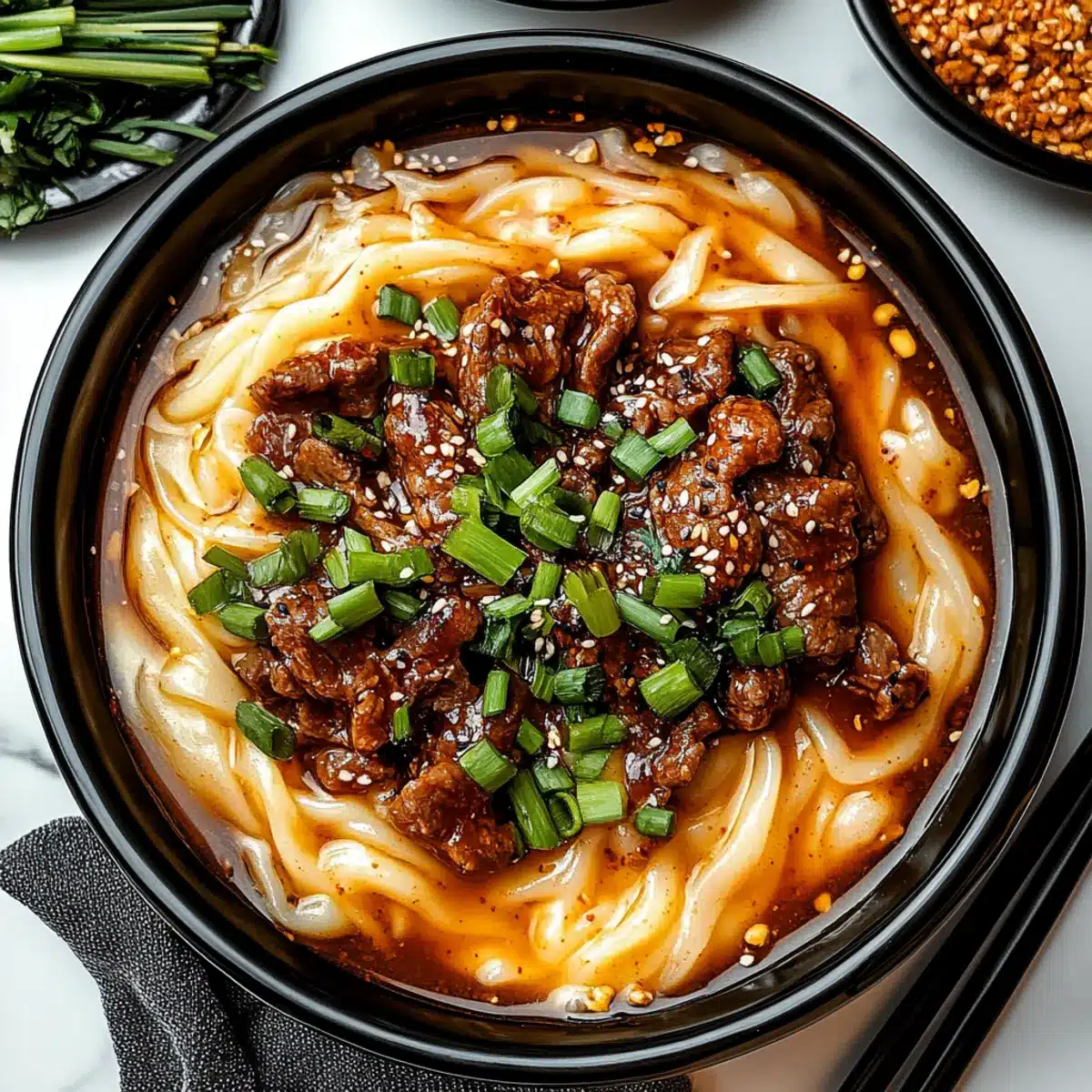
Storage Tips for Spicy Korean Gochujang Beef Noodles
Fridge: Store in an airtight container for up to 3-4 days. Make sure the noodles cool completely to maintain their texture and avoid sogginess.
Freezer: For longer storage, freeze the dish in a freezer-safe container or bag for up to 3 months. Thaw overnight in the fridge before reheating.
Reheating: To reheat, warm in a microwave or stovetop until heated through, adding a splash of water or soy sauce if needed to restore moisture.
Serving Fresh: Best enjoyed hot after cooking for the full burst of flavors that make these Spicy Korean Gochujang Beef Noodles a delight!
Expert Tips for Spicy Korean Gochujang Beef Noodles
-
Slice Against the Grain: Ensure the beef is sliced thinly against the grain to maintain tenderness and enhance the overall texture of the dish.
-
Taste as You Go: Gochujang can vary in spice level, so start with less and gradually add to suit your heat preference. Remember, you can always adjust!
-
Proper Noodle Texture: Allow the noodles to cool before storing leftovers. This prevents them from becoming soggy and keeps the dish enjoyable for future meals.
-
Vibrant Vegetables: Aim for crispy vegetables to add texture. Avoid overcooking them; they should remain tender but still have a slight crunch for the best flavor in your Spicy Korean Gochujang Beef Noodles.
-
Experiment with Proteins: Don’t hesitate to switch the beef for chicken, shrimp, or tofu. This dish is highly customizable and welcomes creativity to suit your dietary needs.
What to Serve with Spicy Korean Gochujang Beef Noodles
Nothing complements a fiery dish quite like a selection of sides and beverages that soothe and elevate your dining experience.
-
Creamy Mashed Potatoes: Their smooth texture offers a delightful contrast to the spicy noodles, creating a balanced mouthfeel.
-
Steamed Broccoli: A fresh, crunchy green side that brightens up the plate and adds essential nutrients without overpowering the main flavors.
-
Refreshing Cucumber Salad: A mix of cool cucumbers, rice vinegar, and sesame oil makes for a palate-cleansing dish that cuts through the heat.
-
Savory Kimchi: The tangy and fermented flavors of kimchi pair perfectly, enhancing the Korean theme while adding complexity to the meal.
-
Garlic Bread Sticks: Soft and buttery, these add a savory touch, perfect for soaking up that delicious gochujang sauce left on your plate.
-
Peach Iced Tea: This lightly sweetened beverage cools down the spice while offering a fruity, refreshing twist that complements the flavors.
-
Chocolate Cake: A slice of rich, moist chocolate cake makes for a delightful finish, balancing the heat with sweetness.
With these pairings, your spicy Korean gochujang beef noodles will shine even brighter on your table.
Spicy Korean Gochujang Beef Noodles Variations
Feel free to let your creativity flow as you customize this delightful dish to suit your taste preferences!
-
Chicken Swap: Substitute beef with thinly sliced chicken breast for a lighter option that still packs a flavor punch.
The chicken absorbs the spicy gochujang beautifully, making each bite deliciously tender and juicy. -
Shrimp Delight: For seafood lovers, use shrimp instead of beef. Just sauté until pink and cooked through.
The slight sweetness of the shrimp complements the spicy sauce exceptionally well, adding another layer of deliciousness. -
Tofu Twist: Opt for firm tofu to create a vegetarian version; simply sauté until golden.
Tofu soaks up the flavors of the gochujang sauce, resulting in a satisfying meal that’s both hearty and healthy. -
Veggie Boost: Add extra vegetables like broccoli, carrots, or snap peas for added nutrition and crunch.
This variation not only brightens the dish but also provides a hearty texture that kids and adults will enjoy alike. -
Noodle Change: Swap out regular noodles for whole grain or gluten-free varieties like rice vermicelli.
It not only accommodates dietary choices but also enhances the overall flavor, making it just as delightful! -
Cold Noodle Salad: Enjoy the leftovers cold by tossing with fresh veggies and a light vinaigrette for a refreshing meal.
This is a fantastic way to experience the flavors of the original dish in a new, vibrant format, perfect for warm days. -
Extra Heat: Add chopped fresh chili or a dash of chili flakes for those who crave an extra kick.
Not only does it elevate the spice level, but it also provides a beautiful burst of color on your plate! -
Bibimbap Style: Serve with a fried egg on top, mimicking traditional bibimbap for an exciting breakfast twist.
The rich yolk adds a creamy texture that beautifully complements the spicy noodles, creating a luxurious feel in each bite.
For more culinary inspiration, don’t miss trying our Lettuce Wraps that transform this delicious meal into a fun, hands-on dining experience!
Make Ahead Options
These Spicy Korean Gochujang Beef Noodles are perfect for meal prep enthusiasts! You can slice the beef and chop the vegetables up to 24 hours in advance, storing them in an airtight container in the refrigerator to maintain their crispness and prevent browning. Additionally, you can mix the sauce ingredients ahead of time and keep it in a separate container for up to 3 days. When you’re ready to enjoy this flavorful dish, simply sauté the prepped beef and veggies, add the sauce, and incorporate the noodles as instructed. This way, you’ll have a delicious meal ready with minimal stress on busy weeknights!
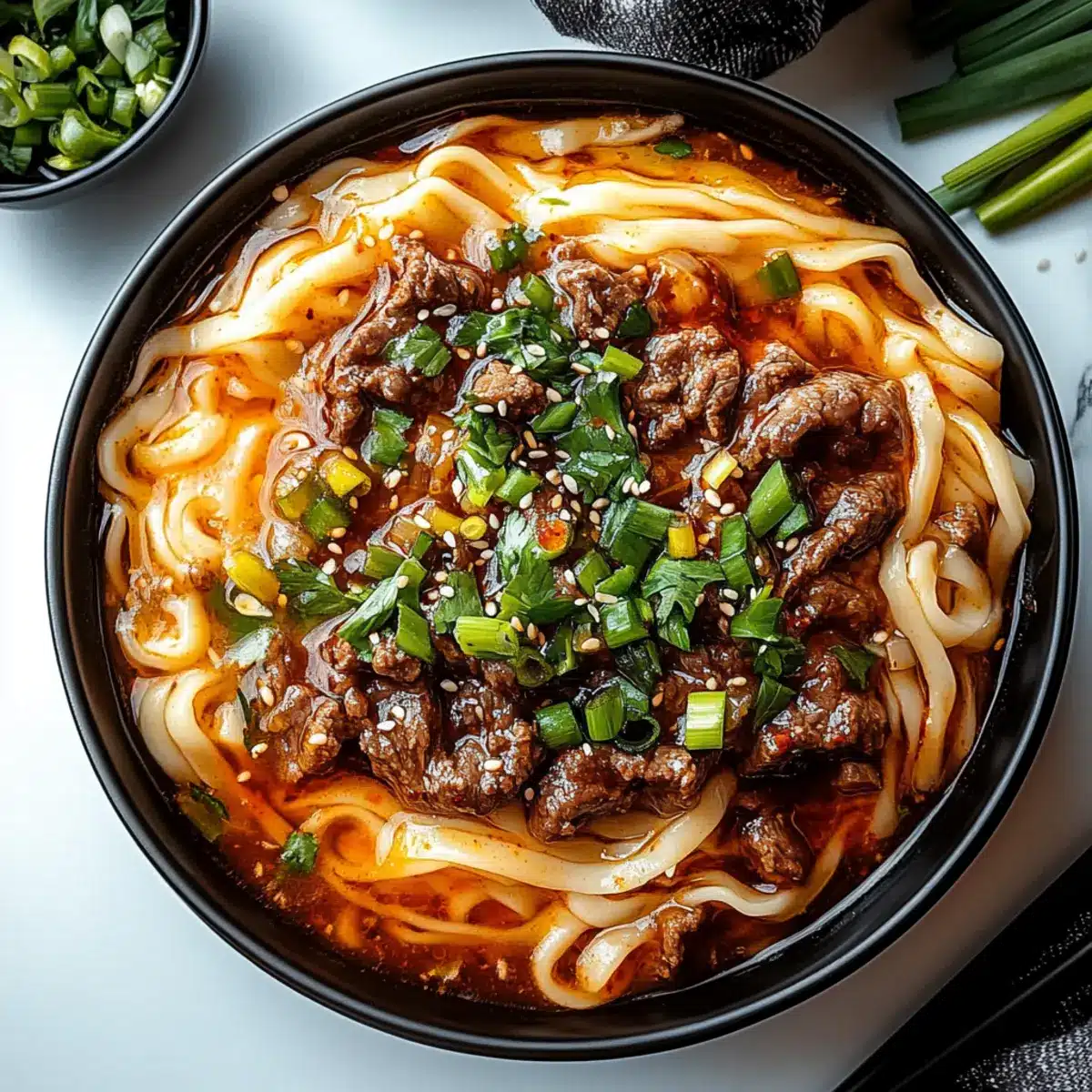
Spicy Korean Gochujang Beef Noodles Recipe FAQs
How do I choose the right beef for my noodles?
Absolutely! For the best results, I recommend using beef sirloin. It provides a rich flavor and tenderness and cooks quickly. Look for bright red, well-marbled cuts, which will be more flavorful. If you prefer, flank steak or ribeye also work beautifully with these Spicy Korean Gochujang Beef Noodles.
How should I store leftovers?
Very good question! Store your Spicy Korean Gochujang Beef Noodles in an airtight container in the fridge for up to 3-4 days. Make sure the noodles cool down completely before storing to prevent them from becoming soggy. For an easy reheating experience, simply pop them in the microwave or warm on the stovetop!
Can I freeze this dish?
Absolutely! For longer storage, you can freeze your Spicy Korean Gochujang Beef Noodles in a freezer-safe container or bag for up to 3 months. To freeze them properly, transfer the cooled noodles and sauce into the container, ensuring there’s no excess air inside. When you’re ready to enjoy them again, thaw overnight in the fridge and reheat on medium heat, adding a splash of water or soy sauce to revive the flavors.
What if I don’t like it too spicy?
No problem! Gochujang varies in spice level, so if you’re sensitive to heat, start with a smaller amount of gochujang (about 1 tablespoon) and gradually increase it until you find your desired balance. Mixing in a bit more brown sugar can also help tone down the heat while still allowing you to enjoy the delicious unique flavors of the Spicy Korean Gochujang Beef Noodles.
Are these noodles suitable for special dietary needs?
Certainly! You can easily customize this dish to meet various dietary preferences. For a gluten-free option, simply swap the traditional noodles for rice noodles or even zucchini noodles. If you want a vegetarian version, replace the beef with tofu and ensure that your sauces are vegan-friendly. This dish truly welcomes creativity to fit any lifestyle!
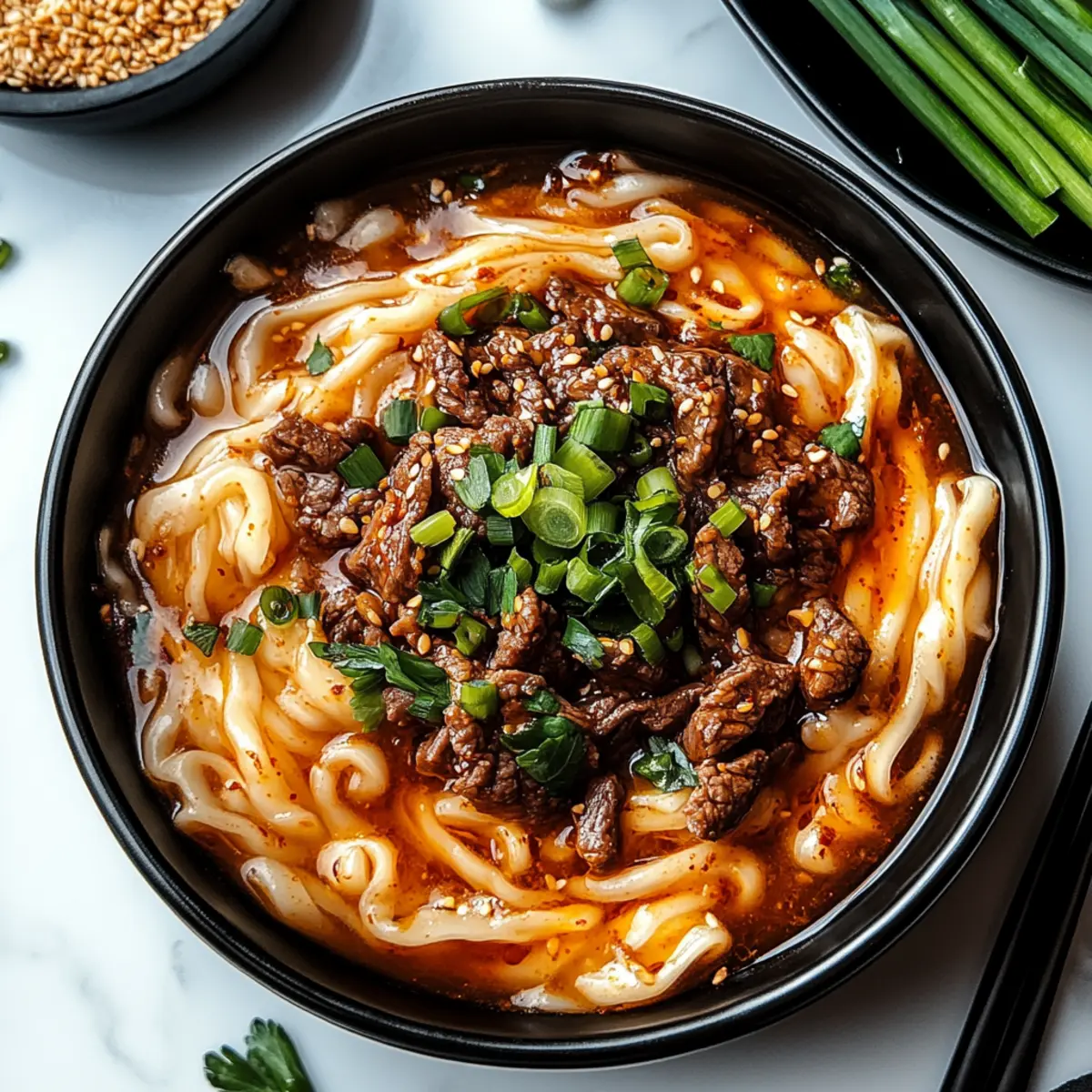
Spicy Korean Gochujang Beef Noodles That Ignite Your Tastebuds
Ingredients
Equipment
Method
- Prepare the Ingredients: Thinly slice the beef sirloin against the grain, mince the garlic, and slice the onion and red bell pepper.
- Heat the Skillet: Add 2 tablespoons of vegetable oil to a large skillet over medium-high heat until shimmering.
- Cook the Beef: Add the sliced beef in a single layer and cook for 3-4 minutes until browned, then transfer to a plate.
- Sauté the Aromatics: In the same skillet, add the minced garlic and sliced onion, cooking for about 2 minutes until translucent.
- Add the Bell Pepper: Toss in the sliced red bell pepper and cook for another 2-3 minutes until softened.
- Make the Sauce: In a small bowl, mix 3 tablespoons of soy sauce, 1 tablespoon of brown sugar, 2 tablespoons of gochujang, 1 tablespoon of sesame oil, and 1 tablespoon of rice vinegar until smooth.
- Combine the Sauce and Vegetables: Pour the sauce over the sautéed veggies in the skillet, stir well, and simmer for 1-2 minutes.
- Return the Beef to the Skillet: Add the cooked beef back into the skillet and toss everything together for about 1 minute.
- Incorporate the Noodles: Add cooked noodles to the skillet and toss gently to combine everything.
- Heat Through and Serve: Allow to heat for another 2-3 minutes and serve garnished with sesame seeds and sliced green onions.
Leave a Reply