
The savory aroma wafting through my kitchen transported me straight to bustling street markets in Seoul, where vibrant flavors mingle in the air. Today, I’m excited to share my latest obsession: Spicy Korean Gochujang Beef Noodles! This dish combines tender beef, chewy noodles, and a kick of gochujang that tantalizes every taste bud. What makes it a standout? Not only is it incredibly quick to whip up, but it’s also super customizable—perfect for those evenings when you want comfort food with a twist. Imagine the satisfaction of savoring each mouthful, knowing you created a spectacular meal from scratch. Are you ready to dive into this spicy, satisfying recipe that will have everyone asking for seconds?
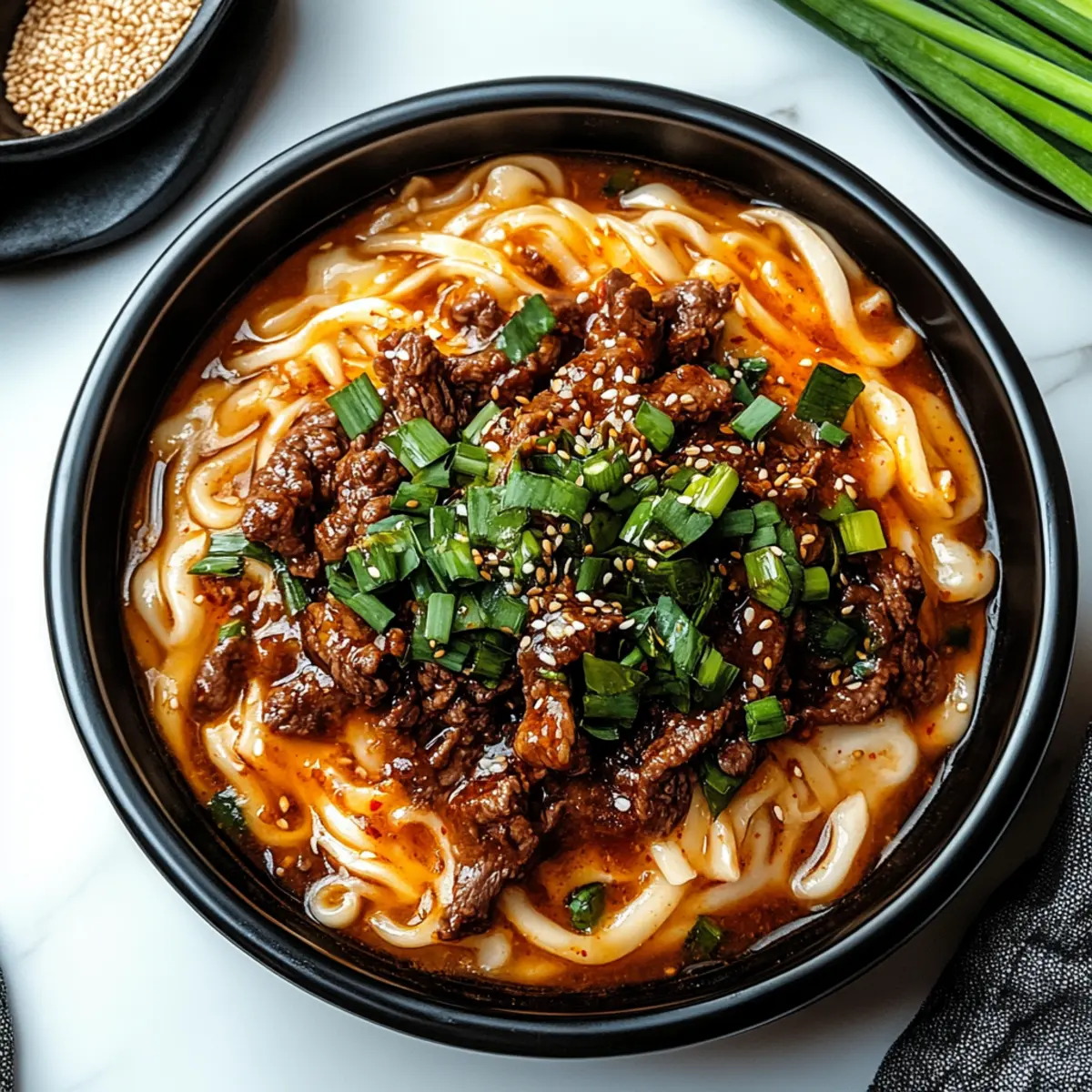
Why Choose Spicy Korean Gochujang Beef Noodles?
Bold Flavors: Each bite bursts with the savory heat of gochujang, offering a unique kick that distinguishes this dish from ordinary noodle recipes.
Quick and Easy: In just 30 minutes, you can have a delicious homemade meal that rivals your favorite takeout, making it perfect for busy weeknights.
Customizable Delight: Tailor the recipe by swapping proteins or adding seasonal veggies, ensuring it suits all taste preferences and dietary needs. Check out more about cooking with versatile proteins.
Mouthwatering Aroma: The fragrant blend of sautéed garlic and onions will fill your kitchen, making it impossible to resist this enticing dish before it’s even ready.
Crowd-Pleasing: Great for family dinners or friendly gatherings, everyone will love the transformative taste and satisfying textures that will have them coming back for more!
Spicy Korean Gochujang Beef Noodles Ingredients
For the Beef
- Beef Sirloin – Provides tender protein; can swap with chicken, pork, shrimp, or tofu for variation.
For the Sauce
- Gochujang (Korean chili paste) – Vital for heat and depth of flavor; adjust to taste for spice preference.
- Soy Sauce – Adds umami and saltiness; low-sodium variants work for a healthier option.
- Brown Sugar – Balances the heat from gochujang; substitute with honey or maple syrup if preferred.
- Rice Vinegar – Adds acidity to balance flavors; lime juice can be used as an alternative.
- Sesame Oil – Enhances nutty flavor; a light cooking oil can work for a milder taste.
For the Noodles and Vegetables
- Cooked Noodles – The base of the dish; any type (wheat, rice, or even spaghetti) works well.
- Garlic – Adds aromatic flavor; fresh garlic is preferred for its robust taste.
- Onion – Provides sweetness and texture; yellow onions or shallots can substitute.
- Red Bell Pepper – Adds sweetness and color; swap with any bell pepper or snap peas if needed.
- Sliced Green Onions – Freshness and color for garnishing; a delightful touch to the finished dish.
For Garnish
- Sesame Seeds – For garnish and crunch; can be replaced with chopped peanuts for added texture.
Dive into this exciting dish that is full of flavor with these Spicy Korean Gochujang Beef Noodles that can easily be adapted to suit your family’s taste!
Step‑by‑Step Instructions for Spicy Korean Gochujang Beef Noodles
Step 1: Prep Ingredients
Begin by preparing all your ingredients for the Spicy Korean Gochujang Beef Noodles. Thinly slice the beef sirloin against the grain for tenderness. Mince 3 cloves of garlic and slice one onion and one red bell pepper. Cook your noodles according to the package instructions, drain them, and set aside while you gather the remaining ingredients.
Step 2: Sauté Beef
In a large skillet or wok, heat 2 tablespoons of vegetable oil over medium-high heat. Once the oil is shimmering, add the sliced beef to the skillet. Cook for 3-4 minutes, stirring occasionally until the beef is browned and just cooked through. Remove the beef from the skillet and set it aside on a plate to keep it warm while you prepare the vegetables.
Step 3: Cook Aromatics
In the same skillet, add another tablespoon of oil if needed, then toss in the minced garlic and sliced onion. Sauté for about 2 minutes until fragrant and the onions become translucent, stirring frequently to prevent burning and allow the savory aromas to fill your kitchen.
Step 4: Add Vegetables
Next, stir in the sliced red bell pepper and sauté for an additional 2-3 minutes, allowing the peppers to soften but still retain some crunch. This step helps build a robust flavor profile for your Spicy Korean Gochujang Beef Noodles. Keep mixing to ensure even cooking and to pick up any flavorful bits stuck to the skillet.
Step 5: Make Sauce
In a medium bowl, combine 3 tablespoons of soy sauce, 1 tablespoon of brown sugar, 2 tablespoons of gochujang, 1 tablespoon of sesame oil, and 1 tablespoon of rice vinegar. Whisk the mixture until smooth and well-blended. This sauce will add exceptional depth to your Spicy Korean Gochujang Beef Noodles, balancing heat with sweetness.
Step 6: Combine
Pour the sauce mixture into the skillet with the sautéed vegetables and stir well to combine. Add the sautéed beef back to the skillet, mixing everything together until the beef is fully coated with the sauce. Let it simmer on medium heat for about 2 minutes for the flavors to meld perfectly.
Step 7: Finish Noodles
Introduce the cooked noodles into the skillet, tossing everything together until the noodles are evenly coated with the delicious sauce. Heat for an additional 2-3 minutes until the noodles are warmed through and absorb some of that luscious sauce, making for a cohesive dish.
Step 8: Garnish & Serve
Remove your Spicy Korean Gochujang Beef Noodles from heat, and serve them hot. Garnish generously with a sprinkle of sesame seeds and sliced green onions for a burst of freshness and color. Enjoy this delightful dish that perfectly combines spicy, sweet, and savory flavors!
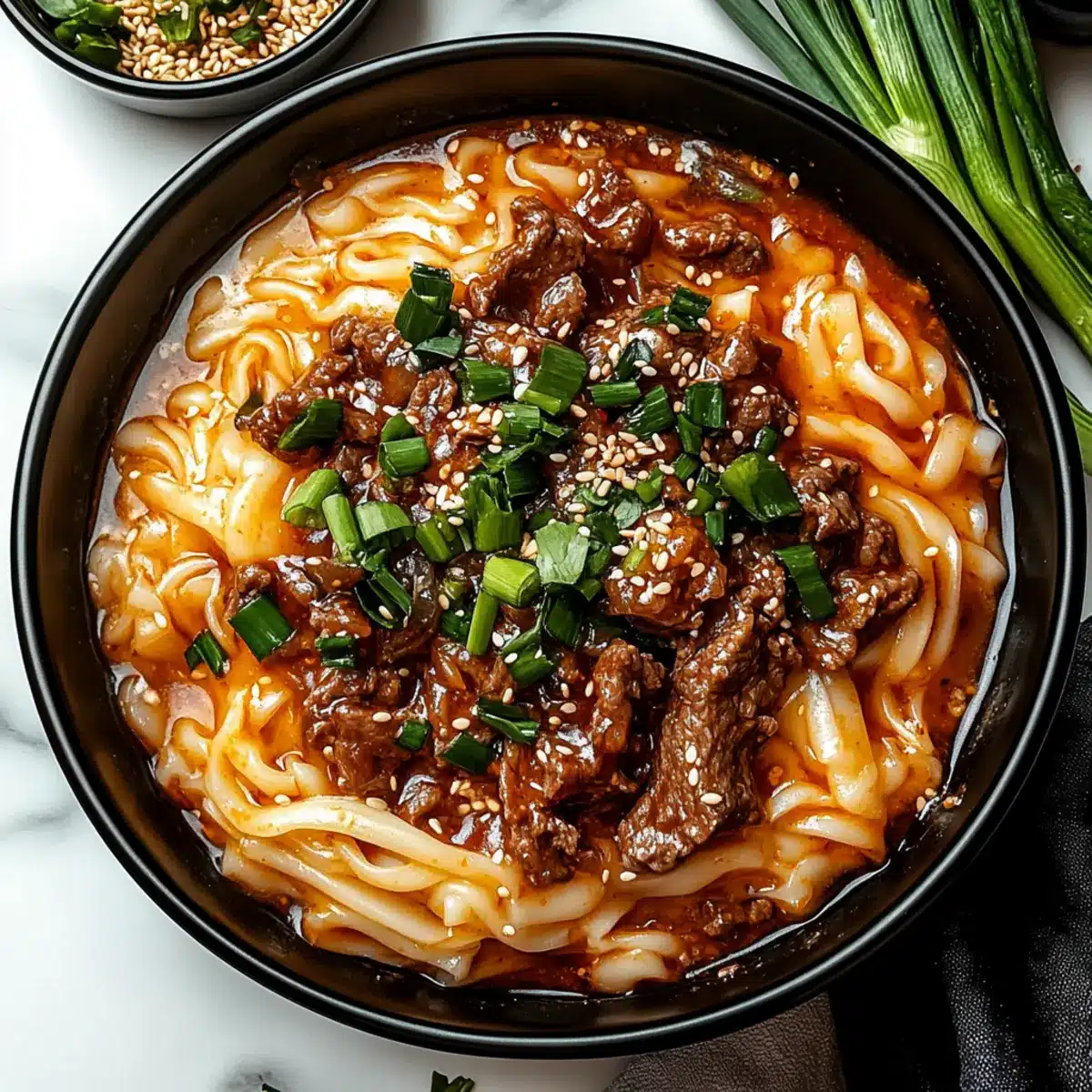
Expert Tips for Spicy Korean Gochujang Beef Noodles
-
Room Temperature Beef: Let the beef sit at room temperature for 15–30 minutes before cooking to achieve even cooking and a tender texture.
-
Adjust Spice Level: Be mindful of the gochujang amount; start with less if you’re sensitive to heat. You can balance extra spice with more brown sugar.
-
Perfect Noodles: Cook the noodles al dente. This prevents them from becoming mushy when mixed with the flavorful sauce of Spicy Korean Gochujang Beef.
-
Don’t Rush: Allow the sauce to simmer for a few minutes to fully develop flavors before serving, enhancing the overall dish’s taste profile.
-
Meal Prep Friendly: Consider making extra sauce and keeping it stored for quick dinners; it pairs beautifully with various proteins, maintaining the vibrant flavors.
What to Serve with Spicy Korean Gochujang Beef Noodles?
Pair your meal with delightful sides that elevate this spicy dish into a complete culinary experience.
-
Cucumber Salad: This refreshing dish balances the heat of the noodles with a crunch and lightness that cleanses the palate. Toss sliced cucumbers with a splash of vinegar and sesame oil for a quick and delicious side.
-
Steamed Bok Choy: Rich in vitamins and with a subtle flavor, steamed bok choy adds an excellent crunch. Its green freshness complements the spiciness beautifully, providing a visually appealing contrast on the plate.
-
Savory Fried Rice: The hearty warmth of fried rice, packed with vegetables and a hint of soy sauce, makes for a perfect match. Each bite brings a satisfying chew that pairs wonderfully with the zing of gochujang beef noodles.
-
Korean Kimchi: Known for its spicy and tangy flavor, kimchi will enhance the overall savory experience, giving you a traditional touch that amplifies the dish’s authenticity. The probiotics in kimchi also bolster your digestive health!
-
Miso Soup: A light miso soup, rich in umami, can serve as a soothing starter. The warm broth prepares your taste buds for the bold flavors in the main dish while offering a cozy touch to the meal.
-
Crispy Spring Rolls: These delightful bites with their crispy exterior and savory filling create an exciting textural contrast to the chewy noodles. Serve them with a soy dipping sauce for a satisfying crunch before diving into the heat of the noodles.
-
Chilled Green Tea: For a refreshing drink option, chilled green tea balances the spices in the noodles with its smooth and subtle flavor. It’s a perfect way to cleanse your palate and elevate your dining experience.
-
Chocolate Mousse: End your meal on a sweet note with a rich chocolate mousse. It’s creamy and decadent, countering the spiciness of the noodles with a delightful sweetness that lingers on your taste buds.
Make Ahead Options
These Spicy Korean Gochujang Beef Noodles are perfect for meal prep enthusiasts! You can slice the beef, mince the garlic, and chop the vegetables up to 24 hours in advance, storing them together in an airtight container in the refrigerator to maintain freshness. The sauce can also be mixed ahead of time; just keep it in a separate container and refrigerate for up to 3 days. When you’re ready to enjoy your meal, simply sauté the aromatics, add the prepped ingredients, and finish cooking the noodles as per the recipe directions. This way, you’ll have a satisfying, homemade dish ready to serve with minimal effort, leaving you more time to relax!
Spicy Korean Gochujang Beef Variations
Feel free to make this dish your own by experimenting with these delicious variations!
-
Protein Swaps: Replace beef with chicken, shrimp, or tofu for a different flavor and texture experience. The versatility of proteins allows you to cater to any dietary preference, ensuring everyone enjoys a tasty meal.
-
Deconstructed Bibimbap: Serve the noodles deconstructed, garnished with fresh cucumber, radishes, and a fried egg for a vibrant twist that adds layers of flavor and color.
-
Cold Spicy Noodle Salad: Toss leftover noodles with fresh vegetables and a light dressing for a refreshing summer dish. This is perfect for picnics or hot days when you’re craving something cool yet zesty.
-
Zucchini Noodles: Use spiralized zucchini for a lower-carb option that adds a refreshing crunch. It’s a wonderful change, especially in warmer months, and pairs beautifully with the spicy sauce.
-
Flavor Boost: Add a tablespoon of kimchi or pickled vegetables for an exciting tang and extra crunch. This brings a layer of authentic Korean flavor that elevates the entire dish.
-
Sweet & Spicy: Experiment by adding a splash of sriracha or chili flakes for an extra kick of heat. Just a little can balance the sweetness from the brown sugar and enhance the overall taste profile.
-
Nutty Twist: Swap sesame seeds for chopped peanuts for an added crunch that complements the smooth noodles and tender beef. This change adds a delightful texture that everyone will love.
-
Asian Greens: Stir in some bok choy or spinach for a nutrient boost and added freshness. The vibrant greenery not only enhances the dish visually but also brings an earthy flavor to the table.
With these variations, you can explore a world of flavors while enjoying your Spicy Korean Gochujang Beef Noodles again and again! Check out more tips on working with different proteins for even more inspiration.
How to Store and Freeze Spicy Korean Gochujang Beef Noodles
Fridge: Store leftovers in airtight containers for up to 3-4 days. Properly sealed, they retain most of their flavor and texture for a delicious meal anytime.
Freezer: For longer storage, freeze the noodles in a freezer-safe container for up to 2 months. Separate the beef, vegetables, and noodles if possible to retain their textures.
Reheating: Thaw frozen noodles overnight in the fridge before reheating. Warm them gently in a skillet with a splash of water or broth to bring back their original consistency.
Make-Ahead: Consider prepping the ingredients and sauce in advance. Store them separately in the fridge for a quick meal during busy weeknights featuring Spicy Korean Gochujang Beef Noodles.
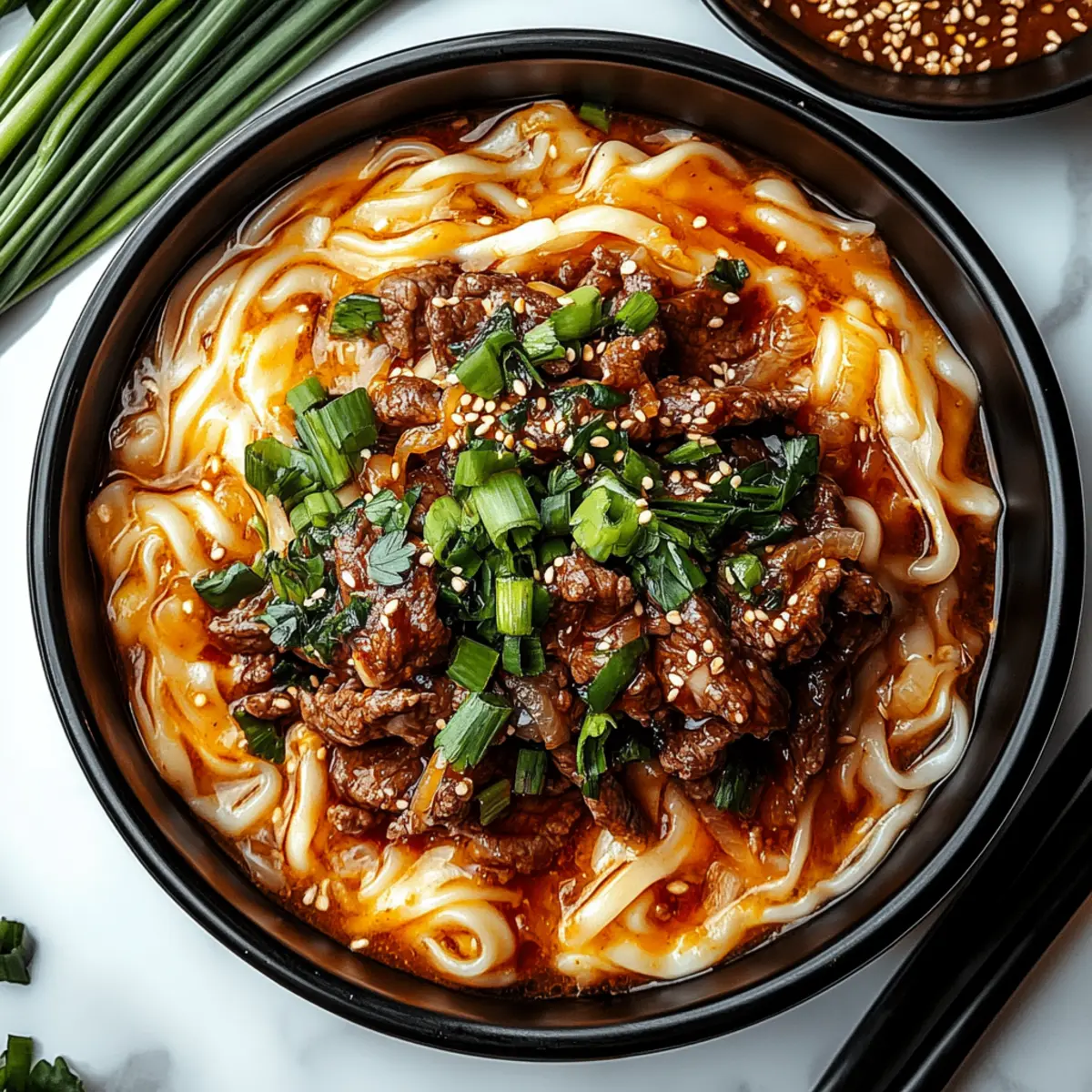
Spicy Korean Gochujang Beef Noodles Recipe FAQs
How do I choose the right beef for this recipe?
Absolutely! For this dish, I recommend using beef sirloin for its tenderness and flavor. Look for cuts that are bright red and slightly marbled for the best texture. If you’re in the mood for variety, you can easily swap it out for chicken, pork, shrimp, or even tofu if you’re aiming for a vegetarian twist!
What is the best way to store leftovers?
Very simple! Store any leftover Spicy Korean Gochujang Beef Noodles in an airtight container in the fridge for up to 3-4 days. Just make sure they cool down before sealing to prevent condensation, which can make them soggy. When it’s time to eat, just reheat and enjoy this delightful meal again!
Can I freeze Spicy Korean Gochujang Beef Noodles?
Absolutely! For long-term storage, you can freeze the noodles in a freezer-safe container for up to 2 months. To maintain the best texture, I suggest separating the beef, noodles, and vegetables if you can. Thaw overnight in the fridge before reheating, and give them a gentle toss in a skillet with a splash of water or broth to revive them!
How can I adjust the spice level of this recipe?
Great question! If you’re concerned about spice, start with a smaller amount of gochujang in the sauce, like just 1 tablespoon. You can always taste and add more if you desire a stronger kick. If it gets too spicy, adding a bit more brown sugar can help balance that heat beautifully!
Can my pets have any of the ingredients in this dish?
Great to consider! While beef is generally safe for dogs and cats, the other ingredients might not be suitable for pets. Be cautious with garlic, as it can be toxic to them in large amounts. Always consult your vet before sharing any human food, especially with spices and sauces like gochujang.
What vegetables can I add to this dish for more nutrition?
The more, the merrier! You can add a variety of vegetables to boost the nutrient content and add extra color. Think snap peas, zucchini, or even broccoli. Just sauté them along with the onions to retain some crunch and freshness in your Spicy Korean Gochujang Beef Noodles.
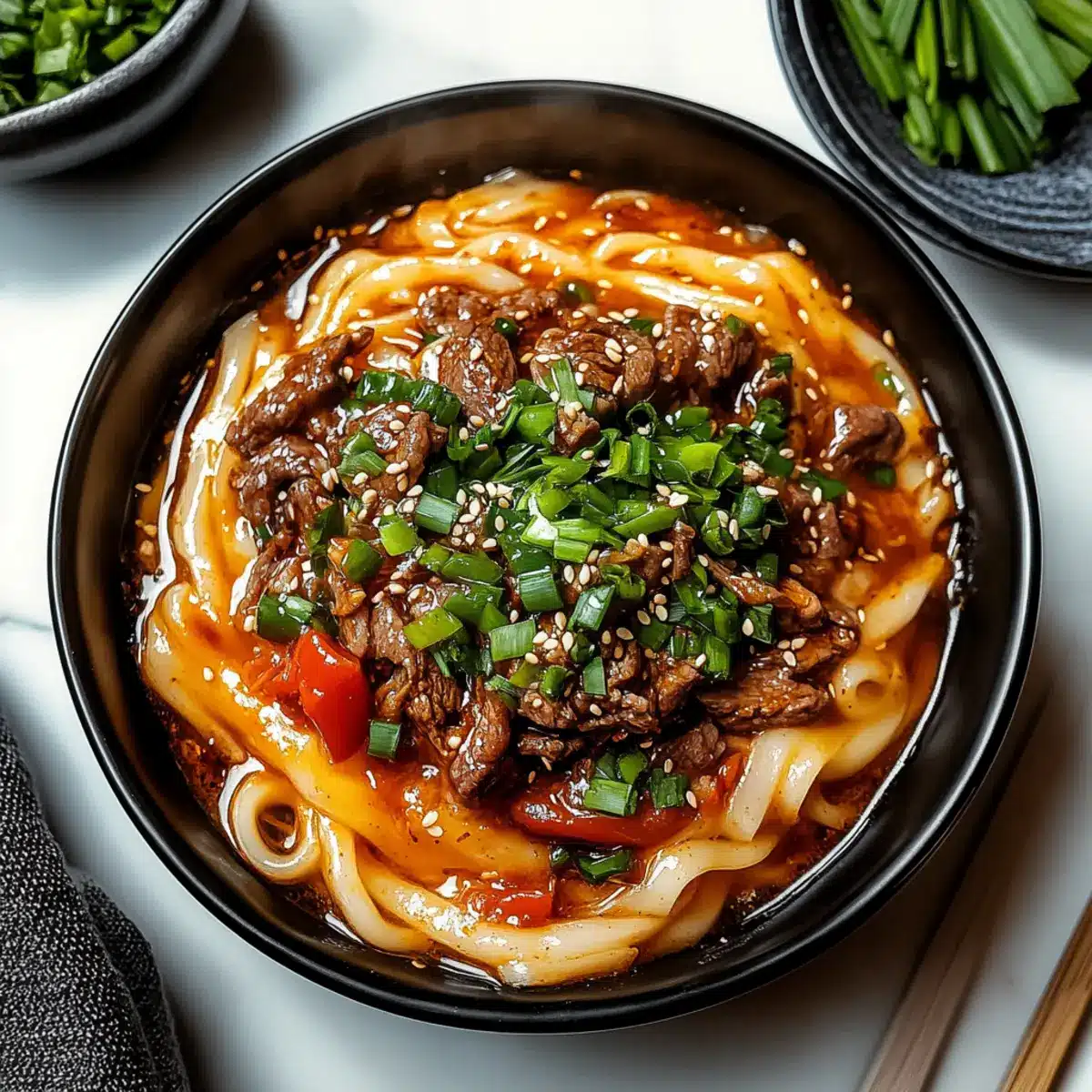
Savor Spicy Korean Gochujang Beef Noodles in 30 Minutes
Ingredients
Equipment
Method
- Begin by preparing all your ingredients for the Spicy Korean Gochujang Beef Noodles. Thinly slice the beef sirloin against the grain for tenderness. Mince 3 cloves of garlic and slice one onion and one red bell pepper. Cook your noodles according to the package instructions, drain them, and set aside while you gather the remaining ingredients.
- In a large skillet or wok, heat 2 tablespoons of vegetable oil over medium-high heat. Once the oil is shimmering, add the sliced beef to the skillet. Cook for 3-4 minutes, stirring occasionally until the beef is browned and just cooked through. Remove the beef from the skillet and set it aside on a plate to keep it warm while you prepare the vegetables.
- In the same skillet, add another tablespoon of oil if needed, then toss in the minced garlic and sliced onion. Sauté for about 2 minutes until fragrant and the onions become translucent, stirring frequently to prevent burning and allow the savory aromas to fill your kitchen.
- Next, stir in the sliced red bell pepper and sauté for an additional 2-3 minutes, allowing the peppers to soften but still retain some crunch.
- In a medium bowl, combine 3 tablespoons of soy sauce, 1 tablespoon of brown sugar, 2 tablespoons of gochujang, 1 tablespoon of sesame oil, and 1 tablespoon of rice vinegar. Whisk the mixture until smooth and well-blended.
- Pour the sauce mixture into the skillet with the sautéed vegetables and stir well to combine. Add the sautéed beef back to the skillet, mixing everything together until the beef is fully coated with the sauce. Let it simmer on medium heat for about 2 minutes.
- Introduce the cooked noodles into the skillet, tossing everything together until the noodles are evenly coated with the delicious sauce. Heat for an additional 2-3 minutes until the noodles are warmed through.
- Remove your Spicy Korean Gochujang Beef Noodles from heat, and serve them hot. Garnish generously with a sprinkle of sesame seeds and sliced green onions for a burst of freshness and color.
Leave a Reply